

7 Signs Your Home Has Poor Insulation (And What You Can Do About It)
🏠 7 Signs Your Home Has Poor Insulation
The most common signs of poor insulation include high energy bills, uneven indoor temperatures, rooms that feel drafty, and an HVAC system that runs longer than usual. You may also notice thin or damaged attic insulation, moisture problems, or difficulty keeping your home comfortable during extreme weather. For Houston homeowners, these issues are worth investigating because of the area's long cooling season. While these symptoms can point to insulation problems, other factors may also be responsible.
🌡️ Why Proper Home Insulation Matters
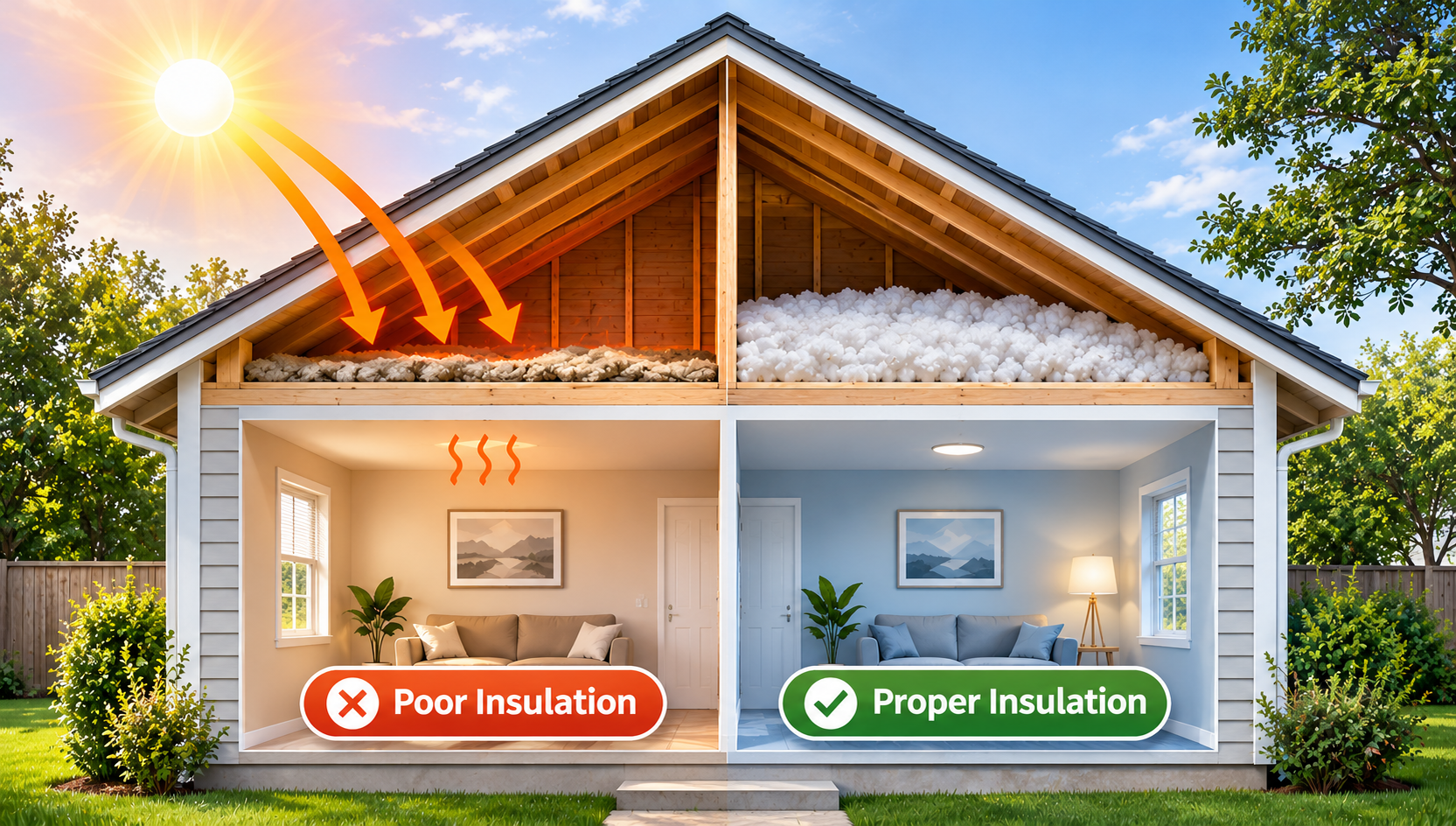
Insulation helps maintain indoor comfort by slowing heat transfer between your home and the outdoors. In Houston, it limits attic heat from entering living spaces during summer and helps retain warmth during colder months. Its effectiveness depends on factors such as R-value, thickness, condition, and coverage. Gaps or compressed sections can reduce thermal resistance and allow more heat to pass through. Air sealing also plays an important role by closing openings around wiring, plumbing, and other ceiling penetrations. While insulation slows heat movement, air sealing prevents unwanted air leakage. Both work together to improve your home's overall comfort.
🔍 7 Signs Your Home Has Poor Insulation
💸 1. Your Energy Bills Keep Increasing
A noticeable increase in your electricity bills can be one of the signs of poor insulation, particularly when your household habits and thermostat settings have not changed. When attic insulation is insufficient, outdoor heat can move into your living areas more easily. Your air conditioner may then need to remove more heat to maintain the temperature you have selected. This can increase cooling demand, especially during Houston's hottest months. However, insulation is not the only possible explanation for rising utility costs. Changes in electricity rates, an aging HVAC system, dirty air filters, refrigerant issues, and increased household energy use can also affect your monthly bills. Compare your recent bills with previous months and consider whether the increase coincides with seasonal temperature changes. If higher costs continue without an obvious explanation, an attic assessment may help identify whether insulation is contributing to the problem.
🌡️ 2. Some Rooms Are Hotter or Colder Than Others
If certain rooms feel warmer or cooler than others despite the same thermostat setting, uneven insulation coverage could be a factor. Thin or missing attic insulation may allow more heat into rooms below, particularly during Houston's hot afternoons. However, solar exposure, leaking ducts, blocked vents, and poor airflow can also cause temperature differences. If the problem persists, an inspection can help identify whether insulation gaps or another issue is affecting your home's comfort.
⚙️ 3. Your HVAC System Runs Longer Than Expected
If your HVAC system runs for extended periods or struggles to reach the thermostat setting, poor insulation may be contributing to the problem. Insufficient attic insulation allows more outdoor heat to enter during summer, increasing the cooling demand on your air conditioner. During colder weather, it can also make it harder to retain indoor warmth. However, dirty filters, refrigerant issues, duct leaks, or an improperly sized HVAC system can cause similar problems. An inspection can help determine whether insulation is adding to your system's workload.
💨 4. You Notice Drafts Around Your Home
Feeling outside air near windows, doors, electrical outlets, or other openings may indicate air leakage. Although drafts are commonly associated with poor insulation, they usually point to gaps in the home's air barrier rather than insulation alone. Insulation slows heat transfer, but it does not necessarily stop air from moving through cracks and openings.
Common areas where air can enter or escape include:
🪟 Gaps around window and door frames.
🔌 Openings around plumbing pipes and electrical wiring.
🏠 Attic access panels and ceiling penetrations.
💡 Gaps around recessed lighting fixtures.
🧱 Unsealed areas near walls and ceilings.
These openings can allow conditioned air to escape and outdoor air to enter. Air sealing addresses these pathways, while insulation helps slow heat movement through building materials. If you notice persistent drafts, a home insulation inspection can help identify whether air leakage, missing insulation, or a combination of both needs attention.
🏚️ 5. Your Attic Insulation Looks Thin or Uneven
Your attic can provide some of the clearest visual signs of bad insulation in house conditions. If you can safely access your attic, look for areas where the insulation appears noticeably thinner than the surrounding material. You may also notice exposed sections of the attic floor, compressed insulation, or visible gaps between covered areas.
Common attic insulation problems include:
📏 Uneven distribution across the attic floor.
📉 Insulation that has become compressed over time.
🔎 Bare patches around attic access points and other openings.
↔️ Areas where the material has shifted or settled.
🧩 Insufficient coverage around the edges of the attic.
Compressed insulation may not provide the same thermal resistance as material installed at its intended thickness. Even when much of the attic looks covered, a few poorly insulated sections can affect overall performance. Insulation depth is one factor to assess, but the material type and its R-value also matter. A professional can measure existing coverage and determine whether the attic needs additional insulation or more extensive work.
💧 6. Your Insulation Shows Signs of Moisture or Pest Damage
Insulation should remain clean and dry to perform properly. If you notice damp material, unusual odors, pest droppings, or visible damage in your attic, the insulation may need attention. Moisture can enter an attic through roof leaks, plumbing problems, or ventilation and condensation issues. Wet insulation may lose some of its effectiveness, while prolonged exposure can contribute to mold growth and material deterioration. Pests can also damage attic insulation. Rodents and other animals may disturb the material, leave droppings, and contaminate affected areas. Look for the following signs when checking your attic:
💦 Damp or Discolored Insulation
Wet patches, dark spots, or discoloration may indicate moisture exposure. Roof leaks, plumbing issues, or condensation could be responsible.
📦 Compressed or Clumped Material
Insulation that appears flattened, clumped, or unusually heavy may have been affected by moisture. Its condition and thermal performance may need professional evaluation.
🐀 Droppings or Nesting Materials
Rodent droppings, nesting materials, and disturbed insulation can indicate pest activity. Contaminated insulation may require removal.
👃 Musty Odors in the Attic
A persistent musty smell may point to excess moisture or possible mold growth. The source should be investigated rather than simply covering the affected area with new insulation. Do not handle wet, contaminated, or potentially mold-affected insulation yourself. Address the source of moisture or pest activity before deciding whether the existing material can remain or needs removal and replacement.
🌞 7. Your Home Is Difficult to Keep Comfortable During Extreme Weather
If your home becomes uncomfortably hot during summer afternoons or loses warmth quickly during colder weather, inadequate insulation could be contributing to the problem. In Houston, attic heat transfer is particularly relevant during extended periods of high outdoor temperatures. Without sufficient insulation, heat can move through the attic floor and affect the rooms below. During colder weather, insufficient coverage can allow indoor heat to escape more readily. This may make certain areas difficult to keep comfortable, even when your heating system is operating. These conditions do not always point to insulation issues. Air leaks, poor ventilation, ductwork problems, and HVAC performance can produce similar symptoms. If your home consistently struggles with temperature control during extreme weather, checking attic insulation is a practical starting point.
🔎 How to Check Whether Your Home Has Enough Insulation
You do not need specialized equipment to perform a basic visual check of your attic. However, a visual review cannot confirm the insulation's full performance or identify every hidden problem. Start by looking at the following:
📏 Check insulation depth: Observe how much material covers the attic floor. Compare its depth across different sections rather than checking only one spot.
🔍 Look for uncovered areas: Pay attention to exposed attic-floor sections, gaps around penetrations, and areas near the attic entrance.
📉 Check for compression: Insulation that has been flattened or disturbed may provide less thermal resistance than properly installed material.
💧 Look for moisture and damage: Check for discoloration, damp sections, pest activity, and unusual odors.
🏠 Review the attic's overall condition: Look for visible roof leaks, damaged ductwork, and other issues that may affect indoor comfort.
Avoid stepping directly on loose insulation or walking across unsupported ceiling areas. Attics can contain exposed wiring, nails, unstable surfaces, and other hazards. If access is difficult or you notice damaged materials, leave the inspection to a professional. A professional home insulation inspection can assess existing R-value, coverage, air leakage, and material condition. This gives homeowners a clearer picture of whether additional insulation, air sealing, or removal is necessary.
🔄 Should You Add More Insulation or Replace What You Have?
Not every insulation problem requires complete removal. In some cases, adding material over existing insulation is sufficient. In others, damaged or contaminated insulation needs to be removed before new material is installed. The right approach depends on the condition of the existing material, the cause of the problem, and the amount of coverage already in place.
Condition | Possible Next Step |
|---|---|
Clean but insufficient insulation | Consider an insulation top-off |
Wet or contaminated insulation | Resolve the cause and evaluate removal |
Uneven coverage | Inspect and correct affected areas |
Insulation appears adequate | Investigate air leaks, ducts, and HVAC |
An insulation top-off may be suitable when the existing material is dry, clean, and in good condition but does not provide sufficient coverage. Additional insulation can help bring the attic closer to the recommended R-value. Replacement may be necessary when insulation has been affected by moisture, pest contamination, or significant deterioration. Simply covering damaged material with a new layer does not address the underlying issue. A professional assessment can help determine which option makes sense for your attic rather than recommending a full replacement when it may not be necessary.
🛠️ How Houston Homeowners Can Improve Attic Insulation
Once you identify the source of your insulation concerns, the next step is choosing the right improvement for your home. For many Houston properties, the attic is a practical place to start because it is exposed to significant outdoor temperature changes.
📋 Schedule an attic inspection
An inspection helps determine the existing insulation's condition, thickness, and coverage. It can also identify air leaks, moisture concerns, and areas that need additional attention.
🔧 Address air leakage
Before installing additional insulation, accessible gaps and openings should be properly sealed. This may include areas around wiring, plumbing penetrations, and attic access points. Proper air sealing helps limit unwanted air movement through the ceiling.
🌬️ Consider blown-in fiberglass insulation
Blown-in fiberglass insulation is commonly used for attic insulation projects because it can cover large areas and reach spaces that are difficult to fill with some other materials. The amount required depends on the existing insulation, desired R-value, and attic layout.
♻️ Remove damaged insulation when necessary
When existing material is wet, contaminated, or severely deteriorated, insulation removal may be necessary before installing new insulation. The source of the damage should be corrected first to prevent the same problem from affecting the replacement material. For homeowners researching attic insulation replacement in Houston TX, it is worth comparing the condition of the existing insulation with the requirements of the property before deciding on a complete replacement. EZ Home Solutions can help homeowners evaluate attic insulation concerns and determine which improvements are appropriate for their property.
📞 When to Schedule a Professional Attic Inspection
If you notice persistent temperature differences, rising energy bills, or visible insulation damage, it may be time to schedule a professional attic inspection. EZ Home Solutions helps Houston homeowners identify attic insulation problems and find the right solution, whether that means adding insulation, fixing coverage gaps, or replacing damaged material.