
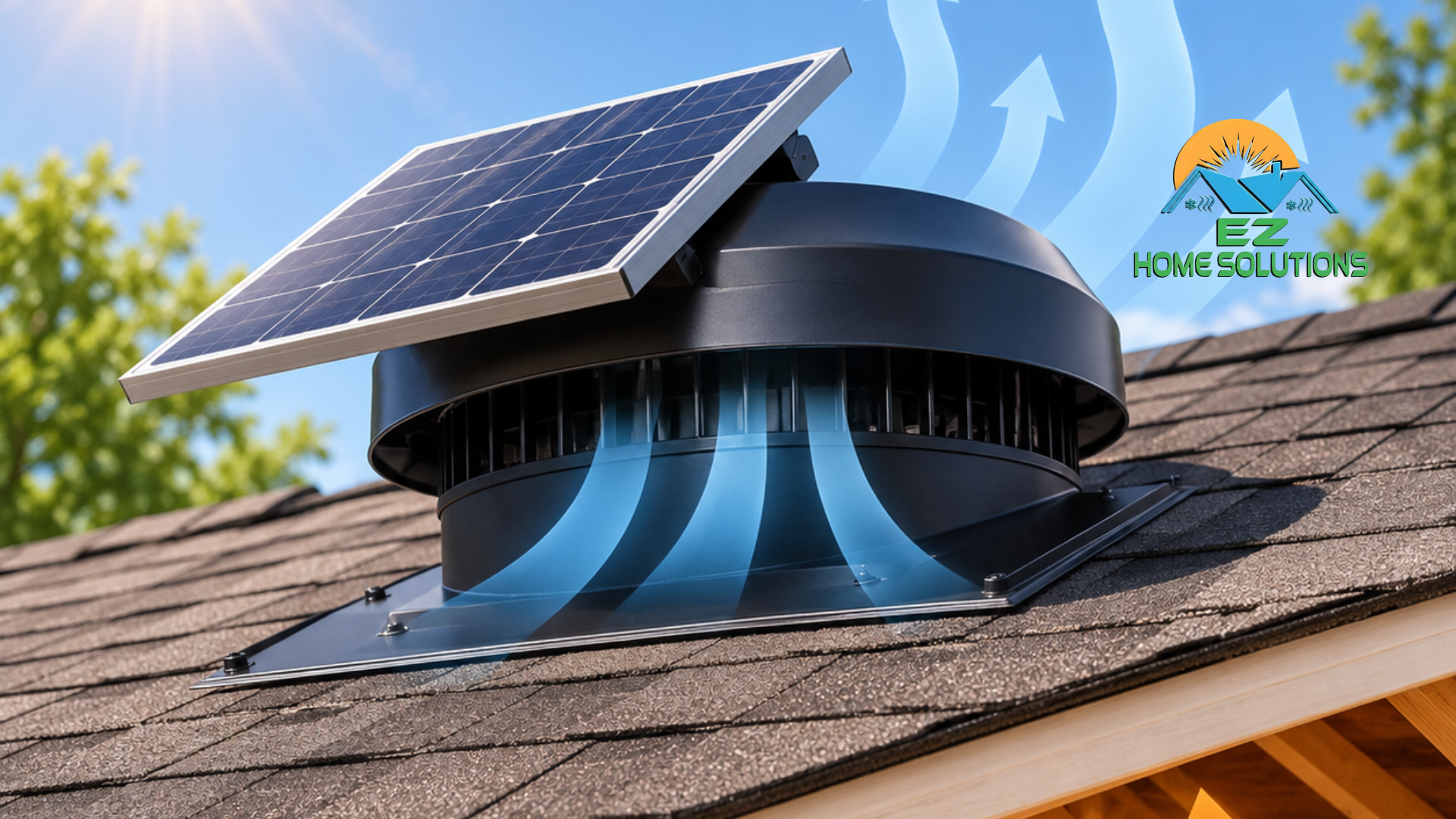
Do Solar Attic Fans Really Work? Benefits, Limitations, and What Homeowners Should Know
☀️ Do Solar Attic Fans Really Work?
During Houston's hot summers, many homeowners wonder: do solar attic fans really work? These fans are designed to remove hot air from the attic using solar power, potentially improving attic air exchange and ventilation. However, their effectiveness depends on factors such as attic design, available intake vents, insulation, and air sealing. While a solar fan may help manage attic conditions, it does not automatically make living spaces cooler or reduce electricity bills.
⚙️ What Is a Solar Attic Fan and How Does It Work?
A solar attic fan is a powered exhaust system that uses energy from a solar panel to move hot air out of the attic. As the fan operates, replacement air enters through intake openings, commonly located at the soffits or other designated vents. The solar panel converts sunlight into electricity, powering the fan during suitable daylight conditions. Some systems also include battery storage or hybrid power options, depending on the model.
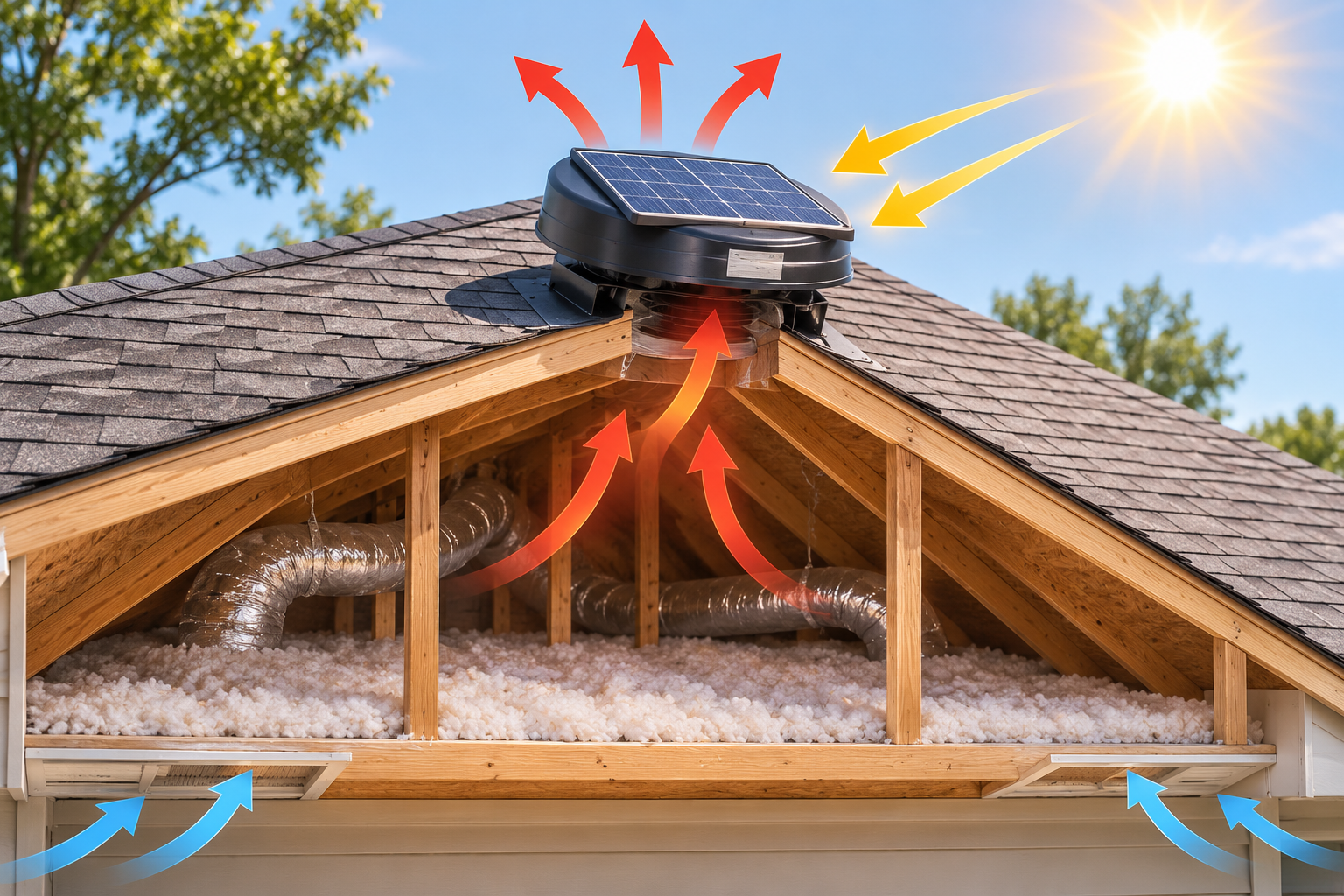
Unlike conventional electric attic fans, solar-powered units rely primarily on sunlight rather than the home's electrical supply. Both systems use mechanical ventilation to remove attic air, but their energy sources and operating conditions differ. For effective solar powered attic ventilation, the attic needs an appropriate intake and exhaust arrangement. Without sufficient replacement air, the fan may pull conditioned air from the living space through gaps in the ceiling. A properly designed attic ventilation system helps maintain an appropriate airflow path.
🌬️ What Are the Potential Benefits of Solar Attic Fans?
🔥 1. Removing Hot Air From the Attic
During summer, roof surfaces absorb sunlight and transfer heat into the attic. A solar-powered exhaust fan can remove some of this hot air and draw replacement air through available intake vents. This increases attic air exchange and may help reduce heat buildup. However, the actual improvement depends on fan capacity, intake ventilation, and how well the attic is separated from the living space.
☀️ 2. Operating With Solar Power
One of the main solar attic fan benefits is that the fan uses sunlight rather than relying entirely on household electricity. This can reduce the electricity needed to operate the ventilation equipment. However, performance depends on available sunlight. Cloudy conditions can reduce solar output, affecting fan speed and operation. Most basic solar models also stop operating when sufficient sunlight is unavailable.
🏠 3. Supporting an Appropriate Attic Ventilation Strategy
Powered exhaust can be considered as part of certain attic ventilation designs. When the intake and exhaust openings are properly balanced, a fan can help move air through the attic. Soffit vents commonly provide replacement air near the roof edges, while exhaust vents allow hot air to leave. The fan's location and airflow capacity should match the existing roof ventilation design.
🌡️ 4. Potentially Improving Attic Conditions
Removing some accumulated hot air may help manage attic temperature. Mechanical ventilation can also contribute to air movement in spaces where the existing ventilation arrangement needs improvement. However, lower attic temperatures do not guarantee a noticeable change in indoor comfort. Proper attic insulation and air sealing remain important because they control how much heat enters the living space.
⚠️ What Are the Limitations of Solar Attic Fans?
Despite their potential benefits, solar attic fan pros and cons should be considered before installation. A fan that is poorly matched to the attic can create additional problems rather than improve ventilation.
🌥️ Dependence on Sunlight
Solar fans rely on available sunlight to operate. Cloudy weather, shading, and low solar exposure can reduce their output. Basic models may also stop running after sunset, meaning they cannot provide continuous ventilation throughout the night.
🌬️ Insufficient Intake Ventilation
A powered exhaust fan needs enough replacement air to operate properly. If soffit vents are blocked, undersized, or insufficient, the fan may struggle to move the intended airflow.
🏡 Poorly Sealed Attic Floors
Gaps around wiring, plumbing, recessed lights, and attic access doors can allow conditioned indoor air to escape. If the attic floor is not properly air-sealed, a fan may draw cooled air from the home instead of relying primarily on outdoor intake air.
⚖️ Negative Air Pressure
One important concern is negative air pressure. When a solar attic fan removes air faster than outside air can enter through designated vents, it creates lower pressure inside the attic. This can pull conditioned air through ceiling gaps and increase the workload on your air conditioner. Depending on the home's design, depressurization may also affect combustion appliances and create backdrafting concerns.
🔧 Installation and Roof-Penetration Considerations
Installing a solar-powered exhaust fan requires a suitable roof location, proper weatherproofing, and appropriate electrical connections. Incorrect placement or installation can create roof leakage concerns and interfere with existing ventilation pathways. For these reasons, a professional assessment should consider intake capacity, air sealing, insulation, and the location of any combustion appliances before installation. Building America Solution Center guidance from the Department of Energy also identifies potential energy and moisture problems associated with powered attic fans and generally favors properly designed passive ventilation.
💡 Can a Solar Attic Fan Lower Your Electricity Bill?
A solar attic fan may use sunlight to operate without drawing power from your home's electrical supply, but that does not guarantee lower household electricity bills. There is an important difference between reducing attic temperature and reducing the energy your air conditioner uses. Even if a fan removes some hot air, the effect on indoor cooling demand may be limited when the attic is already well-insulated. In poorly sealed homes, powered exhaust can pull conditioned air into the attic, potentially increasing cooling demand instead of reducing it. Actual results depend on insulation coverage, air leakage, ventilation balance, and HVAC conditions. Before purchasing a fan, homeowners should evaluate whether improving insulation and air sealing would address the underlying problem more effectively.
🔄 Solar Attic Fans vs. Passive Attic Ventilation
Solar fans and passive ventilation both help move air through an attic, but they use different methods. Passive systems rely on natural airflow, while powered fans use mechanical exhaust.
Feature | Solar Attic Fan | Passive Ventilation |
|---|---|---|
Air movement | Powered exhaust | Wind and buoyancy-driven |
Electricity source | Solar panel | None |
Installation | Fan and electrical components | Intake and exhaust vents |
Performance | Depends on system design and sunlight | Depends on vent design and conditions |
Main consideration | Balanced intake and air sealing | Adequate vent area and airflow path |
Passive ventilation commonly uses soffit vents for intake and ridge or roof vents for exhaust. It does not require a powered fan to move air. The Building America Solution Center generally recommends properly designed passive ventilation over powered attic fans because of the potential pressure and energy-related issues associated with mechanical exhaust.
🏡 When Might a Solar Attic Fan Make Sense for a Houston Home?
Solar attic fan installation in Houston, TX, may be worth evaluating when an attic has specific ventilation requirements that cannot be adequately addressed through existing passive ventilation. However, installation should not be based on attic temperature alone. A professional should first evaluate the available soffit vents, roof ventilation, attic-floor air sealing, and existing insulation levels. The assessment should also consider ductwork and combustion appliances located in or near the attic. These factors can affect whether powered exhaust is appropriate for the property. In Houston's hot and humid climate, moisture management is equally important. Increasing attic air exchange without considering humidity and pressure differences can create additional concerns.
🛠️ When Is Improving Insulation or Air Sealing a Better First Step?
In many homes, improving insulation and air sealing may be more useful than installing an exhaust fan. These improvements address heat transfer and unwanted air movement rather than simply removing attic air. Proper attic insulation slows heat from entering living spaces through the ceiling. Air sealing closes gaps around plumbing, wiring, and other openings that allow conditioned air to escape.
If your home has insufficient insulation or noticeable air leakage, addressing these problems first can improve the performance of the building envelope. A ventilation assessment can then determine whether additional airflow improvements are necessary. For many homeowners, correcting insulation gaps and improving air sealing are practical starting points before considering powered attic ventilation. Ductwork should also be evaluated when airflow problems are present. Air duct services can help address issues involving the home's duct system.
📞 Get Professional Advice on Attic Ventilation in Houston
A solar attic fan may help with attic ventilation, but it is not the right solution for every home. EZ Home Solutions helps Houston homeowners assess attic ventilation, insulation, and air sealing needs.