
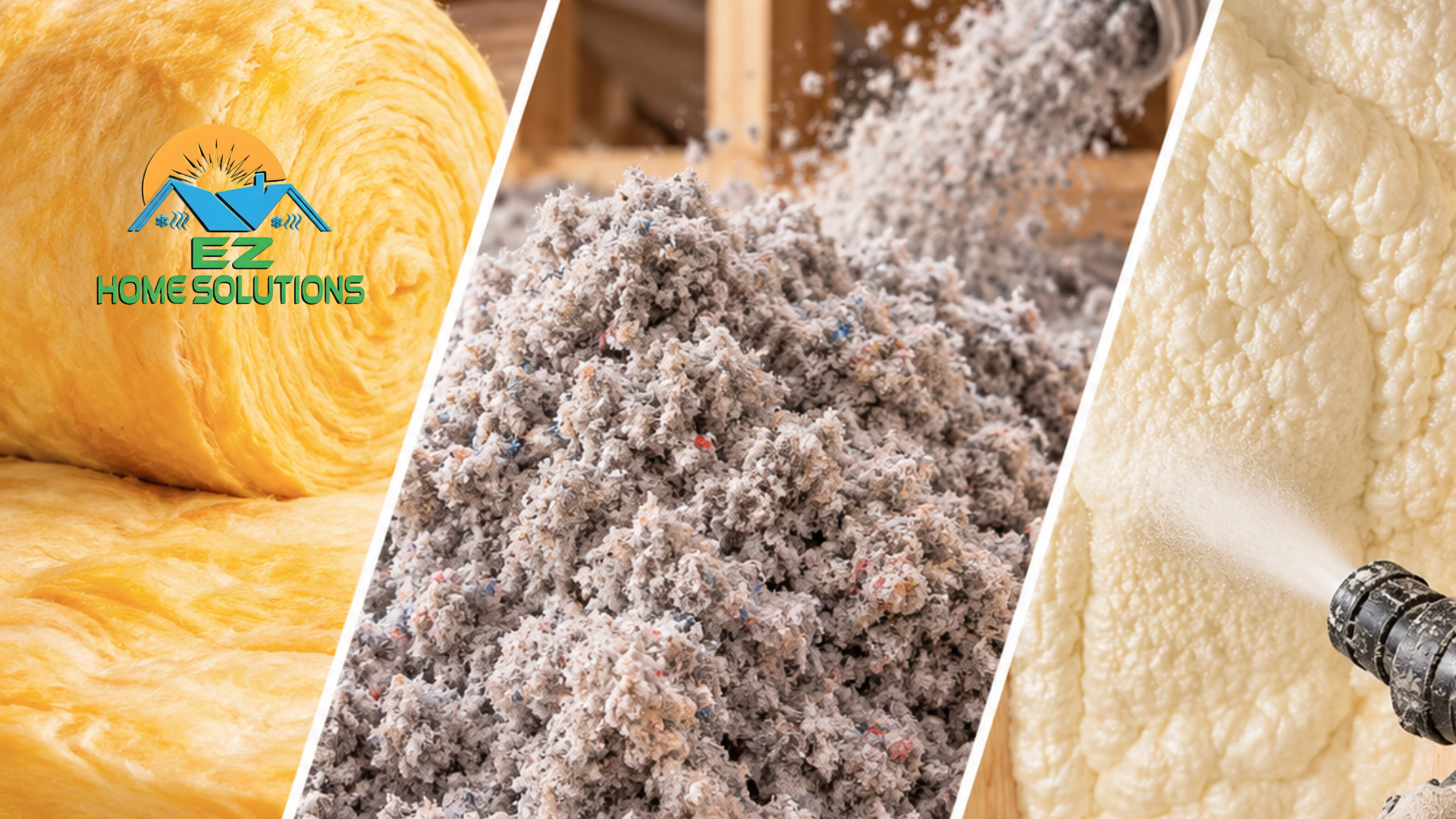
Fiberglass vs. Cellulose vs. Spray Foam: Which Insulation Is Best for Your Home?
🏠 Fiberglass vs. Cellulose vs. Spray Foam
When choosing attic insulation, homeowners often compare fiberglass, cellulose, and spray foam based on cost, thermal performance, and installation requirements. Each material has different advantages, and the right choice depends on your attic's layout, existing insulation, and budget. For Houston homes, moisture management and heat control also matter. Comparing these types of attic insulation can help you decide which option fits your property's needs.
🧱 Three Main Types of Attic Insulation
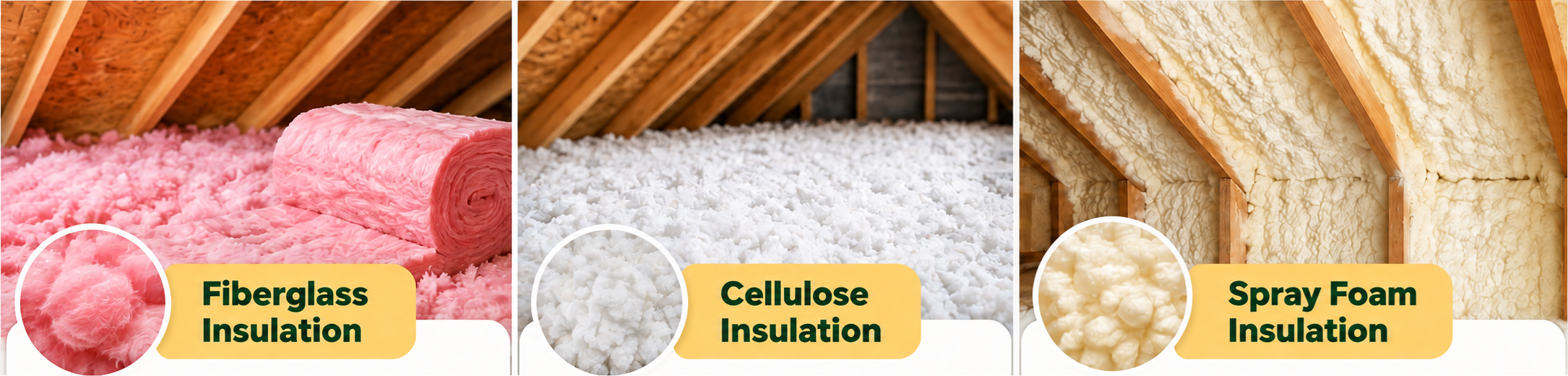
Fiberglass, cellulose, and spray foam are three commonly used insulation materials. They differ in composition, installation methods, R-value, and air-sealing performance.
🟡 Fiberglass Insulation
Fiberglass insulation is made from fine glass fibers and is available in two common forms: batts and loose-fill material. Fiberglass batts come in pre-cut sections and are typically installed between ceiling joists, wall studs, and other framing spaces. Blown-in fiberglass insulation consists of loose fibers distributed across the attic floor using specialized equipment. It can cover irregular spaces and areas that are difficult to reach with batts.
✅ Advantages of Fiberglass Insulation
Fiberglass is lightweight and widely used in residential insulation projects. Blown-in material can provide consistent coverage across an attic floor when installed correctly. It is also suitable for adding insulation over existing material when the conditions allow.
⚠️ Limitations of Fiberglass Insulation
Fiberglass does not stop air leakage on its own. Gaps, compression, and poor installation can reduce its effectiveness. It also needs protection from moisture because wet material may lose some of its insulating performance.
🌿 Cellulose Insulation
Cellulose insulation is generally made from recycled paper products that are processed and treated with fire-retardant chemicals. It is commonly installed as loose-fill material, making it suitable for covering attic floors and filling spaces around framing.
✅ Advantages of Cellulose Insulation
Loose-fill cellulose can provide good coverage around irregular attic areas and framing obstacles. Its density can help limit air movement through the insulated space, although it does not replace proper air sealing. Its recycled content may also appeal to homeowners looking for insulation made partly from reclaimed materials.
⚠️ Limitations of Cellulose Insulation
Cellulose can absorb moisture, so attic conditions and moisture management need attention before installation. It may also settle over time, affecting its installed depth and R-value. Proper installation is important to achieve the intended coverage and performance.
🫧 Spray Foam Insulation
Spray foam is applied as a liquid that expands and hardens into an insulating layer. It comes in two main types: open-cell and closed-cell foam. Both provide insulation and air-sealing properties, but their density, moisture characteristics, and R-value differ.
🔹 Open-Cell Spray Foam
Open-cell foam has a softer, less dense structure. It generally has a lower R-value per inch than closed-cell foam and can provide air sealing when installed at the appropriate thickness. Its vapor permeability means moisture conditions must be considered when selecting it for an attic.
🔹 Closed-Cell Spray Foam
Closed-cell foam is denser and generally provides a higher R-value per inch. It also offers stronger resistance to moisture vapor and can create an effective air barrier when properly installed.
⚠️ Limitations of Spray Foam
Spray foam typically has a higher installation cost than loose-fill insulation. Installation requires trained professionals, proper preparation, and attention to ventilation and building conditions. Applying it incorrectly can create problems that may be difficult to identify or correct later.
🌡️ Which Insulation Provides Better Thermal Performance?
Thermal performance is measured using R-value, which indicates how well a material resists heat flow. A higher R-value generally means greater resistance to heat transfer. However, comparing materials by R-value per inch alone does not determine which one will perform best in your attic. Fiberglass and cellulose are commonly installed as loose-fill insulation across attic floors, while spray foam can be applied along the roofline or other building surfaces. Their performance depends on installed thickness, coverage, air leakage, and the overall attic assembly.
Fiberglass and cellulose both provide thermal resistance but do not replace air sealing. Spray foam combines insulation with air-sealing performance when installed correctly. The right material depends on the home's construction and the areas that need attention.
💰 Which Insulation Is More Affordable?
Insulation installation cost depends on the material, project size, labor, existing attic conditions, and preparation requirements. In general, loose-fill fiberglass and cellulose are often less expensive to install than spray foam, although actual prices vary between properties and contractors.
🧾 Material and Installation Costs
Blown-in fiberglass and cellulose can be practical options for homeowners looking to improve attic-floor coverage without changing the entire attic assembly. Spray foam generally involves higher material and labor costs because of its application process and installation requirements.
🧹 Existing Insulation Removal
If your attic contains wet, contaminated, or damaged insulation, insulation removal may add to the overall project cost. The source of moisture or contamination should also be addressed before new material is installed.
🔄 Adding Insulation vs. Replacing It
Adding loose-fill insulation over clean, dry material can be more straightforward than removing existing insulation and installing a completely different system. However, the final decision should depend on the attic's condition rather than cost alone.
☀️ How Do These Materials Perform in Houston's Hot and Humid Climate?
Houston's hot summers and humid conditions make attic insulation an important part of home comfort. However, selecting the right material involves more than choosing the highest R-value.
❄️ Cooling Demand
During summer, attic temperatures can rise significantly. Proper insulation helps slow heat transfer from the attic into living spaces, reducing the amount of heat your air conditioner needs to remove.
💧 Moisture Management
Houston's humidity makes moisture control an important consideration. Roof leaks, condensation, and poor ventilation can affect attic materials. Before adding insulation, existing moisture problems should be identified and corrected.
🌬️ Attic Ventilation
A vented attic typically uses insulation along the attic floor, allowing the attic space to remain separate from the conditioned living area. Proper attic ventilation and insulation work together as part of this design.
🏡 Air Leakage
Gaps around wiring, plumbing, and ceiling openings can allow conditioned air to escape. Air sealing helps address these openings, regardless of which insulation material is selected. This is an important factor to consider in any insulation material comparison, as insulation alone does not prevent air leakage.
🏗️ Roofline vs. Attic-Floor Insulation
Another consideration is where insulation should be installed. Attic-floor insulation is common in vented attics, while roofline insulation may be considered when designing an unvented attic assembly. The appropriate approach depends on the home's structure, ventilation strategy, and moisture-control requirements.
🟡 When Is Blown-In Fiberglass a Practical Choice?
Blown-in fiberglass insulation is a practical option for many existing homes with vented attics. It can cover large attic-floor areas and reach around framing, wiring, and other obstacles that make installing batts difficult. It may also be suitable when existing insulation is clean and dry but does not provide enough coverage. Adding another layer can help increase the attic's overall R-value without requiring complete removal.
For homeowners comparing spray foam vs. blown-in insulation, the main difference is their application and function. Blown-in fiberglass provides thermal resistance, while spray foam can also create an air barrier. If the attic already has a suitable vented design, blown-in fiberglass may be a practical way to improve insulation coverage without changing the roofline assembly.
🌿 When Might Cellulose or Spray Foam Be Worth Considering?
Although blown-in fiberglass works well for many attic upgrades, other materials may be appropriate depending on the property's design.
♻️ When to Consider Cellulose
Cellulose may suit homeowners who prefer loose-fill insulation with recycled content. Its ability to cover irregular spaces makes it useful in certain attic configurations. However, existing moisture conditions and potential settling should be considered before installation.
🫧 When to Consider Spray Foam
Spray foam may be worth considering when a project requires insulation and air sealing in the same application. It can be useful in specific roofline assemblies, particularly when designing an unvented attic. However, installation complexity and higher costs should be part of the decision.
Neither material is automatically better than fiberglass. The choice depends on the home's insulation requirements, attic configuration, and installation conditions.
🔍 How to Choose the Right Insulation for Your Home
Choosing the best attic insulation for homes requires looking at the entire attic rather than comparing material specifications alone.
🏠 Attic Configuration
Determine whether your attic is vented or unvented and whether insulation belongs on the attic floor or roofline.
📋 Existing Insulation Condition
Check whether the current material is clean, dry, compressed, contaminated, or unevenly distributed. Damaged insulation may need attention before adding another layer.
📏 Target R-Value
Consider the recommended R-value for your location and the amount of insulation already installed. This helps determine how much additional material may be required.
💵 Budget
Compare material, labor, preparation, and removal costs. A lower initial installation cost does not necessarily make one option suitable for every attic.
💧 Moisture Conditions
Address roof leaks, condensation, and other moisture concerns before installing new insulation.
🛠️ Installation Requirements
Consider the equipment, preparation, and professional expertise required for each material. Proper installation plays a major role in long-term performance. For many Houston homeowners, blown-in fiberglass insulation is a practical option for improving existing attic insulation. However, the right recommendation should always reflect the property's actual conditions.
📞 Get Professional Guidance for Your Attic Insulation Project
Choosing between fiberglass, cellulose, and spray foam starts with evaluating your attic's condition and insulation needs. EZ Home Solutions helps Houston homeowners with attic insulation assessments and blown-in fiberglass installation. Contact the team to discuss your project and find out whether adding insulation is the right step for your home.