
How Long Does Blown-In Insulation Last? Signs It's Time for a Replacement
🏠 How Long Does Blown-In Insulation Last?
Does blown-in insulation need to be replaced after a certain number of years? Not necessarily. Its service life depends on the insulation material, installation quality, attic conditions, and exposure to moisture, pests, or physical disturbance. Fiberglass and cellulose can both provide long-term thermal performance when properly installed and maintained, but they respond differently to changes in attic conditions.
Rather than replacing insulation based on age alone, homeowners should evaluate its depth, condition, coverage, and ability to meet the home's insulation requirements. Understanding these factors helps determine whether an attic needs additional insulation, localized repairs, or complete replacement.
🧱 What Is Blown-In Insulation and How Does It Work?
Blown-in insulation is a loose-fill material installed using specialized equipment that distributes insulation across attic floors and other suitable spaces. Unlike traditional batts, loose-fill insulation can cover irregular surfaces and fit around framing members, wiring, and other obstructions.
The two most common materials used for blown-in attic insulation are fiberglass and cellulose. Fiberglass consists of fine glass fibers, while cellulose is typically manufactured from recycled paper products treated with fire-retardant chemicals.
Both materials slow heat transfer by trapping air within their structure. Their thermal performance is measured by R-value, which indicates resistance to heat flow. A higher R-value generally provides greater thermal resistance, but the installed depth, density, and consistency of coverage also matter.
Proper installation is essential. Gaps, compression, insufficient depth, and blocked ventilation pathways can reduce the effectiveness of an otherwise suitable insulation material.
⏳ How Long Does Blown-In Insulation Typically Last?
There is no universal expiration date for blown-in insulation. Both fiberglass and cellulose can remain functional for many years, provided they are protected from moisture, contamination, and significant physical damage.
🟡 Fiberglass Insulation
Fiberglass is generally a durable material because its glass fibers do not readily decompose under normal attic conditions. It does not have to be replaced simply because it has been installed for a long time.
However, its performance can be affected by compression, moisture exposure, pest activity, and uneven distribution. Water intrusion can cause insulation to become damp or clumped, while physical disturbance may leave sections of the attic floor insufficiently covered.
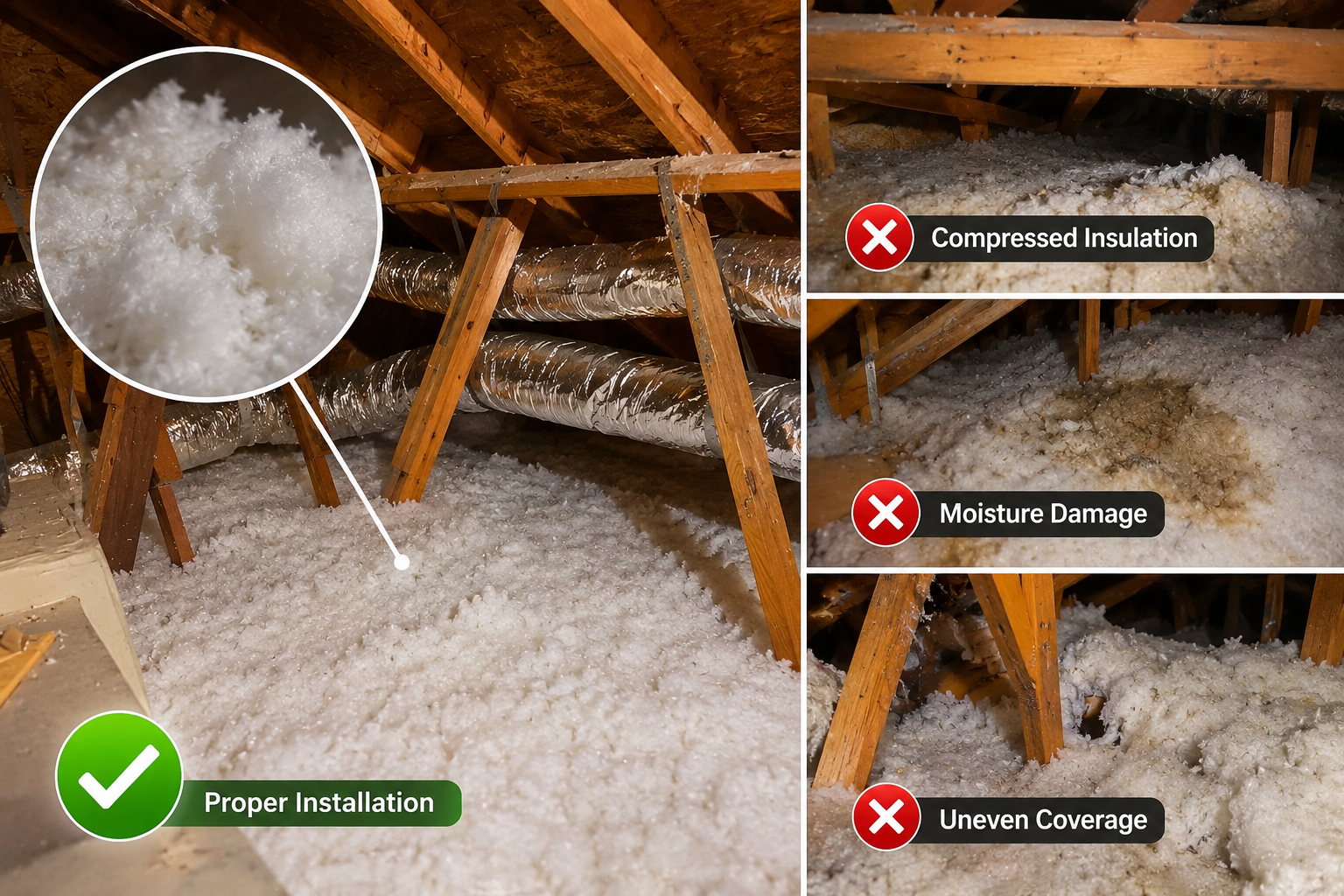
When fiberglass remains dry, clean, and evenly distributed at the required depth, it can continue providing effective thermal resistance.
🌿 Cellulose Insulation
Cellulose can also provide long-term insulation performance, although its physical characteristics differ from fiberglass. Loose-fill cellulose may settle after installation, reducing its depth and potentially affecting the achieved R-value.
Professional installation accounts for the material's expected settling by following product-specific coverage and density requirements. Moisture is another important consideration. Prolonged water exposure can affect cellulose's structure and create conditions that require inspection or removal.
🛠️ Why Installation Quality Matters
The material itself is only one part of the insulation system. Installation depth, coverage, density, and attic preparation all influence long-term performance.
Manufacturers provide product-specific installation instructions and coverage charts that help determine the required material quantity for a target R-value. Following these specifications is important because installing insulation too shallowly or distributing it unevenly can result in inadequate thermal resistance from the beginning.
For this reason, the question of how often attic insulation should be replaced is better answered through an assessment of its current condition than by relying on its installation date.
⚠️ What Factors Can Shorten the Life of Blown-In Insulation?
Even durable insulation can lose effectiveness when attic conditions change. Several issues deserve particular attention.
💧 Moisture and Roof Leaks
Roof leaks, plumbing failures, and condensation can introduce moisture into attic insulation. Prolonged dampness may reduce thermal performance and contribute to mold growth or material deterioration.
The source of moisture should be identified and corrected before deciding whether the affected insulation can remain. Simply covering wet material with a new layer does not resolve the underlying problem.
🐀 Rodents and Pest Contamination
Rodents and other pests can disturb insulation by creating nests, moving loose-fill material, and leaving droppings or other contaminants. This can create gaps in coverage and compromise the condition of the attic.
Localized disturbance may require correction, but heavily contaminated insulation often needs professional removal before new material is installed.
📉 Settling, Compression, and Uneven Coverage
Settling is particularly relevant to cellulose insulation, which may lose some installed depth over time. Fiberglass can also become compressed or displaced when people move through the attic or when other work is performed.
Insulation depth should be evaluated across multiple attic areas rather than at a single convenient location. Significant differences in coverage can indicate that additional material or corrective work is needed.
🔧 Renovations and Improper Installation
Electrical, plumbing, roofing, and HVAC projects can disturb existing insulation. Contractors may move material, compress it, or leave sections uncovered after completing their work.
Installation problems can have similar consequences. Missing sections, insufficient depth, and improperly maintained clearances around heat-producing equipment can affect the overall performance of the attic insulation system.
🔍 Signs Your Blown-In Insulation May Need Attention
Visible damage is not always necessary for insulation to become less effective. Some problems are easy to recognize, while others require a closer inspection.
The following conditions are worth investigating:
Missing or uneven coverage: Exposed attic-floor areas, bare patches, and noticeably thin sections can indicate insufficient thermal protection.
Wet, stained, or clumped material: These conditions may point to roof leaks, plumbing problems, or condensation.
Pest activity: Droppings, nesting materials, and disturbed insulation may indicate contamination or damaged coverage.
Compressed or settled insulation: Reduced depth can affect the installed R-value, particularly when the material no longer meets the intended coverage requirements.
Persistent indoor comfort problems: Uneven temperatures and increased cooling demand may indicate insulation deficiencies, although ductwork, air leakage, and HVAC problems can produce similar symptoms.
Damage after attic work: Roofing, electrical, plumbing, or HVAC projects may leave insulation displaced or compressed.
These signs do not automatically mean the entire attic needs new insulation. An inspection should establish whether the problem is localized or affects a substantial portion of the existing material.
➕ Can You Add New Blown-In Insulation Over Old Insulation?
Yes. Installing additional blown-in insulation over existing material is often a practical option when the original insulation is clean, dry, and in suitable condition. This process is commonly called an insulation top-off.
Adding another layer increases the total insulation depth and can help bring the attic closer to its intended R-value. It may also be more cost-effective than removing and replacing material that is still performing properly.
Before installation, however, the existing insulation should be evaluated for moisture damage, pest contamination, deterioration, and significant compression.
Other attic conditions also matter. Air leaks should be addressed where appropriate, and insulation must not block soffit vents or required clearances around heat-producing equipment.
If the existing material is wet, contaminated, or severely damaged, adding a new layer is not an appropriate substitute for correcting the problem. In these situations, professional attic insulation removal may be necessary before installing new material.
🔄 Blown-In Insulation Top-Off vs. Full Replacement
The decision to add insulation or replace the existing material depends primarily on its condition, the extent of the damage, and the attic's current thermal requirements.
Factor | Insulation Top-Off | Full Replacement |
|---|---|---|
Existing material | Clean, dry, and suitable | Wet, contaminated, or damaged |
Scope of work | Add another insulation layer | Remove old material and install new insulation |
Typical situation | Insufficient depth or coverage | Significant damage or contamination |
Main objective | Increase the existing R-value | Restore suitable attic insulation conditions |
Preparation | Inspect existing material and attic | Identify and correct the cause of damage |
A top-off is generally appropriate when the existing insulation remains functional but does not provide sufficient thermal resistance. Full replacement may be necessary when moisture damage, pest contamination, or severe deterioration makes the material unsuitable for continued use.
Removing insulation that is still in good condition can add unnecessary project costs. The condition of the existing material should determine the scope of work.
🏡 How Often Should Houston Homeowners Inspect Their Attic Insulation?
Houston's hot, humid climate makes attic inspections particularly useful because moisture intrusion, roof leaks, and condensation can affect insulation over time. However, there is no single inspection schedule that applies to every property.
Homeowners should consider having their attic evaluated after significant roof leaks, pest activity, major renovations, or noticeable changes in indoor comfort. An inspection is also worthwhile when insulation appears uneven, compressed, or visibly damaged.
A professional assessment should consider more than insulation depth. It should evaluate the material's condition, attic ventilation, moisture concerns, visible air leakage, and the presence of damaged or obstructed areas.
If the attic requires additional coverage, blown-in insulation installation may be suitable. The appropriate amount depends on the existing insulation, the target R-value, and the property's construction.
For homeowners considering attic insulation replacement in Houston, TX, evaluating the existing material before scheduling removal can help avoid unnecessary work and identify the improvements that will make the most difference.
📞 Find Out Whether Your Attic Needs More Insulation or Replacement
Blown-in insulation does not need replacing simply because of age. Its condition, coverage, and thermal performance matter more. EZ Home Solutions helps Houston homeowners assess attic insulation and determine whether a top-off or replacement is appropriate. Contact the team for an attic assessment and estimate.