
Where Does Your Home Lose the Most Energy? Common Areas to Check
Where Does Your Home Lose the Most Energy?
High utility bills do not always mean your HVAC system is the problem. Your home may be losing conditioned air or gaining outdoor heat through poorly insulated areas, air leaks, windows, and ductwork. These issues can make heating and cooling systems work harder to maintain indoor temperatures. For Houston homeowners, identifying where energy escapes and where heat enters is particularly important during long, hot summers. Knowing where your home loses the most energy can help you prioritize the right improvements.
🌡️ How Homes Lose Energy
Homes gain and lose heat through several processes, including conduction, convection, and radiation. These affect the building envelope — the roof, walls, windows, doors, floors, and other barriers separating indoor and outdoor spaces.
Conduction occurs when heat moves through solid materials, such as poorly insulated walls and ceilings. Convection involves heat movement through air, including unwanted air movement through gaps and openings. Radiation transfers heat through electromagnetic waves, such as sunlight entering through windows or heat radiating from a hot roof. Air leakage occurs when outdoor air enters or conditioned air escapes through openings around doors, windows, wiring, plumbing, and other penetrations.
Together, these factors influence indoor comfort and energy consumption. Some areas of the home are more vulnerable than others, depending on construction, insulation, and exposure to outdoor conditions.
🏠 The Main Areas Where Your Home Wastes Energy
Attic, Roof, and Exterior Walls
Attics are important areas to inspect because inadequate insulation can allow outdoor heat to move into living spaces. During Houston summers, roof surfaces absorb significant solar heat, increasing attic temperatures. Insufficient attic insulation, uneven coverage, and air leaks around ceiling openings can affect indoor comfort and cooling demand.
Exterior walls can also contribute to energy loss when insulation is insufficient or unevenly installed. Thermal bridging is another factor: heat travels more easily through materials such as wood or metal framing than through surrounding insulation. These areas may be difficult to identify through a basic visual inspection.
Improving attic insulation energy efficiency starts with checking existing insulation depth, condition, and coverage. Air sealing may also be necessary to address gaps that insulation alone cannot close.
🪟 Windows, Doors, and Other Openings
Windows and exterior doors can contribute to energy loss through air leaks, inefficient glazing, and poor weatherstripping. Gaps around frames may allow conditioned air to escape while outdoor air enters. Windows also contribute to solar heat gain when direct sunlight passes through the glass, particularly in rooms with significant afternoon exposure.
Smaller openings can create similar problems. Gaps around recessed lights, plumbing pipes, electrical wiring, and attic access doors may allow conditioned air to escape into the attic. Even when attic insulation is sufficient, unsealed openings can affect overall energy performance.
Check door seals, window frames, weatherstripping, and accessible ceiling openings for visible gaps or damage. Curtains, blinds, and appropriate window improvements can also help manage unwanted heat.
🌬️ Air Ducts and HVAC Systems
Ductwork carries heated or cooled air throughout your home. When ducts run through hot attics or other unconditioned spaces, leaks and inadequate insulation can affect their performance. Duct leakage allows conditioned air to escape before reaching its intended rooms. Poorly insulated ducts can also gain heat from surrounding spaces, increasing the cooling demand on your HVAC system.
The HVAC equipment itself can also contribute to high energy consumption. Dirty filters, equipment wear, incorrect thermostat settings, and airflow problems may affect system performance. These issues do not necessarily indicate heat loss through the building structure, but they can increase the energy needed to maintain comfortable indoor temperatures.
Checking duct connections, visible damage, insulation condition, and equipment performance can help identify areas that need attention.
🏡 Floors, Foundations, and Crawl Spaces
Floors above unconditioned spaces, such as garages or crawl spaces, can contribute to unwanted heat transfer when insulation is missing or damaged. Gaps around floor penetrations and exposed floor assemblies may also allow air infiltration.
Although these areas may receive less attention than attics, they can affect indoor comfort depending on the home's construction.
☀️ Which Areas Matter Most in Houston's Climate?
Houston's hot and humid climate makes cooling efficiency a major concern for homeowners. Rather than focusing only on where a house loses heat during winter, it is also important to identify where outdoor heat enters during summer.
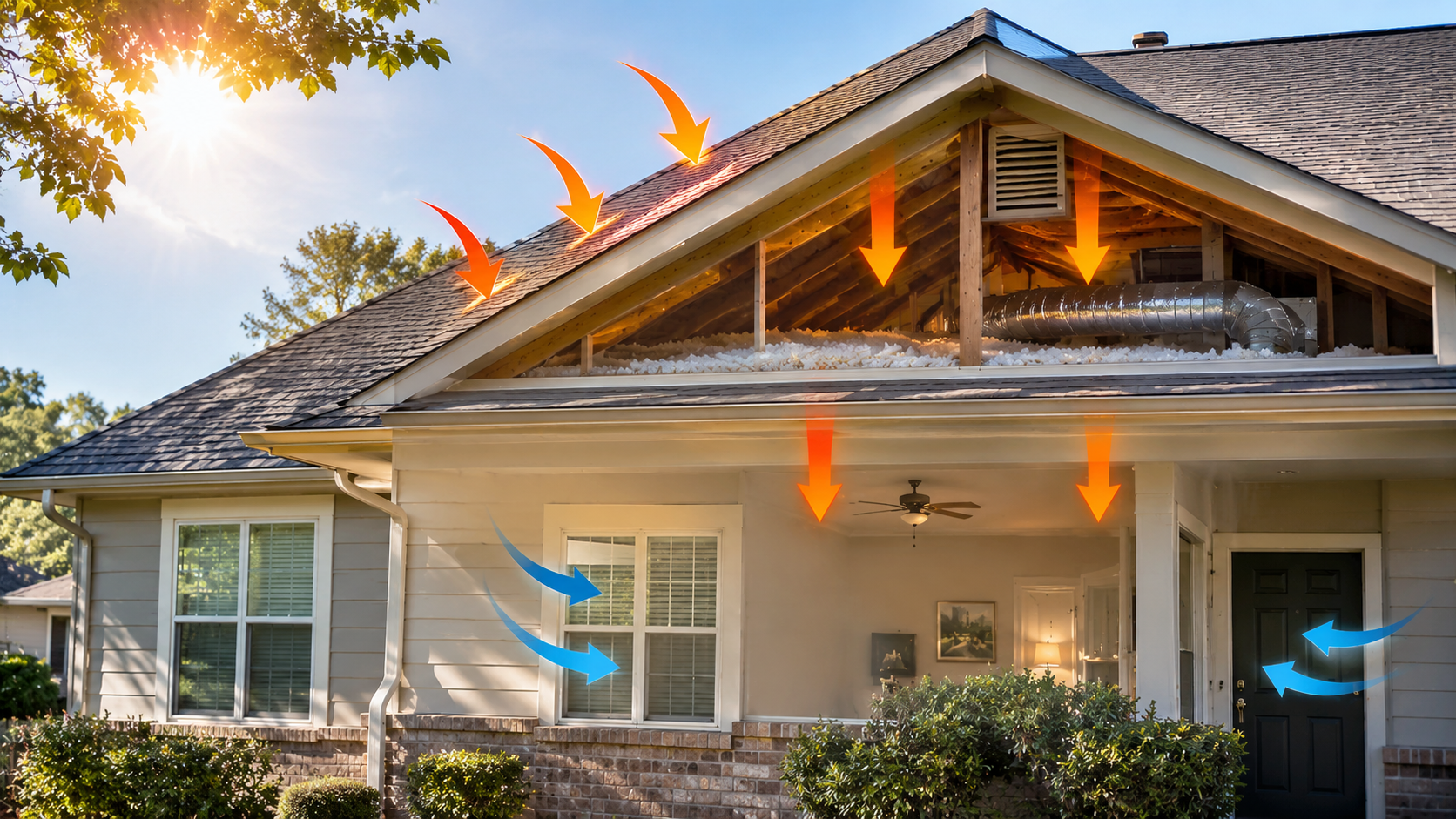
The attic is a key area because high temperatures can increase heat transfer through ceilings when insulation coverage is insufficient. Direct sunlight through windows and heat absorbed by roof surfaces can further increase indoor cooling demand. Air leakage around doors, windows, and ceiling penetrations allows outdoor air to enter, while leaking or poorly insulated ducts can reduce cooling efficiency when they run through hot attics.
No single component is responsible for every home's energy problems. The right improvements depend on insulation coverage, air leakage, duct conditions, and HVAC performance. Homeowners looking to reduce cooling costs in Houston, TX, should consider evaluating these areas together.
🔎 How to Find Energy Loss in Your Home
Start with a basic inspection of attic insulation, window seals, exterior doors, and accessible ductwork. A visual inspection can reveal obvious gaps and damage, but it cannot identify every hidden leak.
You can also compare electricity bills across different seasons and previous years. Higher usage may indicate increased cooling demand, although utility rates, weather, and household habits also affect costs.
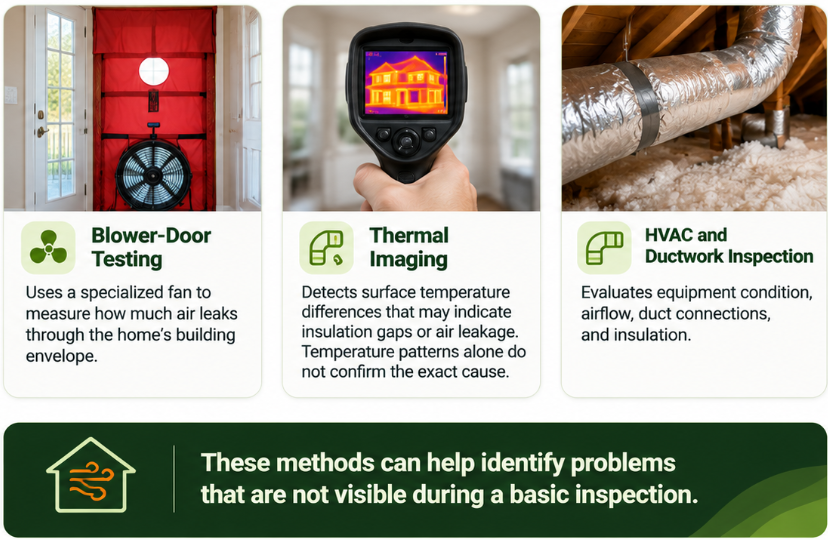
For a more detailed assessment, a professional energy audit may include several testing methods:
Blower-door testing: Uses a specialized fan to measure how much air leaks through the home's building envelope.
Thermal imaging: Detects surface temperature differences that may indicate insulation gaps or air leakage. Temperature patterns alone do not confirm the exact cause.
HVAC and ductwork inspection: Evaluates equipment condition, airflow, duct connections, and insulation.
🛠️ Which Home Energy Improvements Should You Prioritize?
The best home energy efficiency improvements depend on the problems identified during an inspection. Addressing the areas that need attention first can help avoid unnecessary upgrades.
Problem | Possible Improvement |
|---|---|
Inadequate attic insulation | Insulation upgrade |
Air leaks around openings | Appropriate air sealing |
Leaking ductwork | Duct sealing or repair |
Excessive solar heat gain | Shading or window improvements |
Inefficient HVAC operation | Maintenance or system assessment |
Prioritizing improvements based on actual conditions helps homeowners address the source of energy waste rather than making changes without identifying the problem.
🔧 How Attic Insulation and Air Duct Improvements Work Together
Attic insulation and ductwork improvements address different parts of home energy performance. Insulation slows heat transfer between the attic and living spaces, while properly sealed and insulated ducts help deliver conditioned air where it is needed.
If attic insulation is insufficient, heat can move into rooms below and increase cooling demand. At the same time, leaking ducts may allow cooled air to escape before reaching those rooms. Addressing both issues can support better cooling efficiency. However, the right improvements depend on the attic's condition, duct placement, and overall HVAC setup.
🏡 Start With the Areas That Need Attention Most
High energy bills and uneven indoor temperatures can have several causes, from insufficient attic insulation to leaking ductwork. EZ Home Solutions helps Houston homeowners with blown-in attic insulation and air duct services to address these concerns. Contact the team to assess your home's insulation needs and find practical ways to improve indoor comfort.