

Why Is Your House So Hot Upstairs? 7 Possible Reasons
Why Is Your House So Hot Upstairs?
Does your thermostat show a comfortable temperature downstairs while your upstairs bedrooms still feel too hot? This is a common problem in two-story homes, especially during Houston summers. If you're wondering, why is my house so hot upstairs, several factors could be responsible, including insufficient attic insulation, air leaks, ductwork problems, and uneven HVAC airflow. Identifying the cause can help you find the right solution instead of relying on your air conditioner alone.
🌡️ Why Are Upstairs Rooms Usually Hotter Than Downstairs?
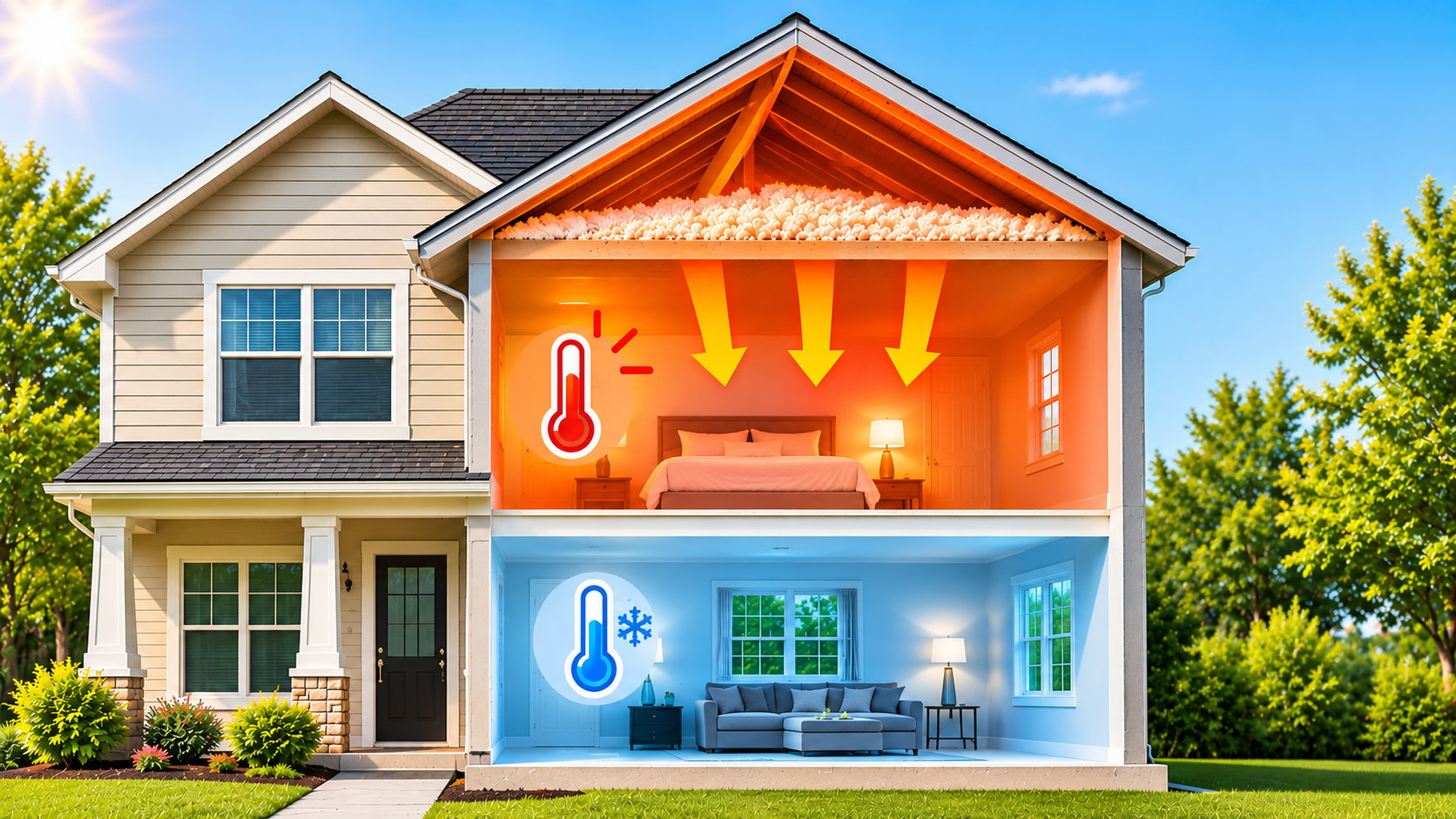
Upstairs rooms often become warmer because of differences in heat transfer, sunlight exposure, and cooling distribution. Heat can enter through the attic, roof, and exterior walls, increasing indoor temperatures on the upper floor. Temperature stratification also plays a role. Warm air tends to rise, while cooler air settles lower, creating temperature differences between floors. However, this is not the only reason upstairs may feel uncomfortable. Solar heat gain through windows, attic heat buildup, and poorly distributed conditioned air can also contribute. In two-story homes, ductwork layout and insulation coverage may make it harder to maintain consistent temperatures throughout the property.
🔥 7 Reasons Your Upstairs Rooms Are Too Hot
1. 🏠 Your Attic Has Insufficient Insulation
Insufficient attic insulation allows outdoor heat to move more easily into your home. During Houston summers, attic temperatures can become significantly higher than indoor temperatures, increasing heat transfer through the ceiling and into upstairs rooms. Proper thermal insulation slows this movement and helps maintain more consistent indoor temperatures. If your attic has thin coverage, exposed areas, or compressed material, it may contribute to the problem. For homeowners considering attic insulation for two-story homes, checking the existing insulation's depth, condition, and R-value is a practical starting point.
2. 💨 Your Attic Has Air Leaks
Small openings around attic access doors, electrical wiring, plumbing, and ceiling penetrations can allow hot air to enter your living spaces. These gaps may also let conditioned air escape, making it harder to maintain comfortable temperatures upstairs. Air sealing helps close these openings and limits unwanted air movement. If your upstairs feels warmer despite having sufficient insulation, checking for air leakage may reveal another source of the problem.
3. 🌬️ Your Air Ducts Are Leaking or Poorly Insulated
Ductwork leakage can affect how much conditioned air reaches your upstairs rooms. When ducts run through a hot attic, gaps in their connections may allow cooled air to escape before reaching the intended spaces. Poorly insulated ducts can also absorb heat from the surrounding attic, affecting the temperature of the air moving through them. This may contribute to uneven cooling in house conditions, particularly when several ducts pass through unconditioned spaces. Checking duct connections, insulation, and visible damage can help identify whether the distribution system needs attention.
4. ⚙️ Your HVAC System Has Uneven Airflow
Sometimes the problem is not the insulation but how conditioned air moves through your home. HVAC airflow imbalance can leave upstairs bedrooms receiving less cool air than downstairs living areas. Blocked supply registers, restricted return-air pathways, and poorly balanced ductwork can affect air distribution. Closed vents may also interfere with the system's intended airflow. Check whether upstairs registers are open and unobstructed. If airflow remains weak, an HVAC professional can assess duct balancing, return-air pathways, and equipment performance.
5. ☀️ Upstairs Windows Receive Excessive Sunlight
Windows exposed to direct sunlight can increase indoor temperatures, particularly during afternoon hours. West-facing windows are often more affected because they receive strong afternoon sun. This solar heat gain can make upstairs bedrooms warmer, especially when sunlight enters through large or poorly shaded windows. Curtains, blinds, exterior shades, and window coverings can help limit direct sunlight. If only certain rooms become uncomfortable during specific hours, window orientation may be contributing to the problem.
6. 🌪️ Your Attic Ventilation Is Inadequate or Blocked
Attic ventilation helps remove hot air and moisture from the attic space. When vents are blocked or ventilation is insufficient for the attic design, heat and moisture conditions may become harder to manage. This can contribute to attic heat buildup during warmer months. However, ventilation alone cannot replace proper insulation or air sealing. These components perform different functions and need to work together. If your attic feels unusually hot or shows signs of moisture, a professional assessment can help identify blocked vents, ventilation concerns, and insulation gaps.
7. ❄️ Your HVAC System Cannot Maintain Comfortable Temperatures
If your upstairs remains hot even when the air conditioner runs for extended periods, your HVAC system may not be distributing or producing enough conditioned air to meet the home's cooling demand. Equipment sizing, dirty filters, refrigerant problems, aging components, and maintenance issues can all affect performance. Before assuming your air conditioner needs replacement, consider having the equipment, ductwork, and airflow evaluated. Several issues may be contributing to the same temperature problem.
🔎 How to Identify What's Making Your Upstairs Too Hot
The symptoms you notice can provide useful clues about why your upstairs rooms are warmer. However, one symptom may have several possible causes, so checking the surrounding conditions is important.
Symptom | Possible Cause | What to Check |
|---|---|---|
Hot ceiling areas | Insulation gaps | Attic insulation coverage |
Weak airflow upstairs | Duct or HVAC issue | Registers and ductwork |
Afternoon overheating | Solar heat gain | Window orientation and shading |
Large temperature differences | Multiple possible causes | Insulation, air sealing, HVAC |
If you notice more than one of these symptoms, an inspection can help determine whether the problem involves attic insulation, ductwork, ventilation, or cooling distribution.
🌡️ How to Keep Upstairs Rooms Cooler During Houston Summers
If you're researching how to keep upstairs cool in summer, start by identifying where heat enters and whether your HVAC system distributes air properly.
🏠 Improve Attic Insulation
Check for thin or uneven insulation coverage. Adding suitable insulation can slow heat transfer from the attic into upstairs living spaces. Explore blown-in attic insulation as one possible option.
🔧 Seal Accessible Air Leaks
Close gaps around attic access points, wiring, plumbing, and other ceiling openings to reduce unwanted air movement.
🌬️ Check Duct Connections
Inspect accessible ductwork for loose connections, visible damage, and insufficient insulation. Leaking ducts can reduce the amount of cooled air reaching upstairs rooms. If you suspect ductwork problems, review the available air duct services.
🌪️ Evaluate Attic Ventilation
Make sure attic vents are not blocked and that the ventilation system is appropriate for the attic design. Ventilation should work alongside insulation and air sealing.
☀️ Reduce Window Heat Gain
Use blinds, curtains, or exterior shading to limit direct sunlight entering upstairs bedrooms, particularly those facing west.
⚙️ Have HVAC Airflow Assessed
An HVAC professional can check supply registers, return-air pathways, duct balancing, and equipment condition to identify cooling distribution problems.
🧊 Should You Upgrade Attic Insulation Before Replacing Your AC?
If your upstairs remains uncomfortable, replacing the air conditioner may not be the first step. Insufficient insulation, air leakage, and ductwork problems can increase cooling demand even when the HVAC equipment is functioning properly. Before investing in new equipment, consider evaluating the attic's insulation coverage, sealing accessible air leaks, and checking ductwork. If these areas are contributing to the problem, addressing them may improve overall cooling performance.
However, if the HVAC system has sizing or mechanical issues, it may still require professional attention. Evaluating the entire setup can help you make a more informed decision before committing to a major replacement.
☀️ Do solar attic fans help cool upstairs rooms?
Solar attic fans can help move hot air out of certain attic spaces, depending on the ventilation design. However, they do not replace insulation or air sealing, and their effectiveness depends on the home's existing ventilation system.
🏡 Improve Upstairs Comfort With the Right Attic Solutions
If your upstairs rooms stay hot despite running the air conditioner, the problem may involve insulation, ductwork, or ventilation. EZ Home Solutions helps Houston homeowners assess attic insulation and identify practical improvements, including blown-in fiberglass installation. Contact the team to discuss your attic and find the right solution for your home.